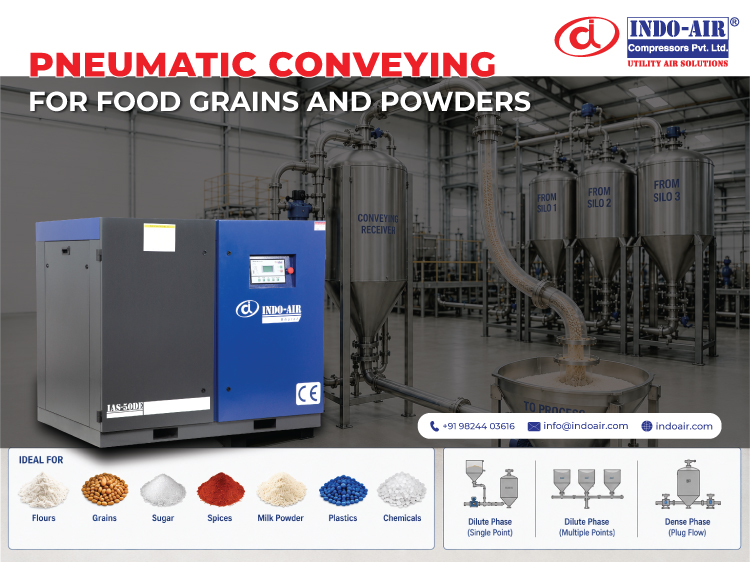
Pneumatic conveying systems is essentially using air to move food grains and powders from one place to another. Think of it like a really big, enclosed vacuum cleaner or blower system, specifically designed for industrial use. This method is incredibly useful in the food industry because it’s clean, efficient, and protects the quality of delicate food products. It’s a game-changer for handling everything from flour and sugar to spices and coffee beans, minimizing spillage, contamination, and the labor involved in manual transport.
Understanding Pneumatic Conveying for Food Grains and Powders
What is Pneumatic Conveying?
At its core, pneumatic conveying involves moving bulk materials through a pipeline using a gas, usually air, as the conveying medium. For food products, this typically means a carefully controlled air stream. Instead of scooping or forklifting, imagine grains gently floating through a tube from a storage silo to a processing machine. This offers a significant advantage over mechanical conveying systems like screw conveyors or belt conveyors, especially when dealing with fine powders or ingredients that need to be kept free from external contaminants. The system creates a pressure difference, either by pushing air into the system (positive pressure) or pulling air through it (negative pressure), effectively carrying the product along.
Why is it Important for Food Processing?
The food industry has unique challenges. You’re dealing with products meant for consumption, so hygiene, preventing contamination, and maintaining product integrity are paramount. Pneumatic conveying excels here. It’s a fully enclosed system, which means less dust, less potential for foreign objects to enter the product stream, and better control over the environment. This directly translates to safer products and higher quality outputs. Plus, it can be really flexible, allowing you to move materials vertically, horizontally, and around corners, which is a huge benefit in often-cramped processing plants.
Benefits of Pneumatic Conveying for Bulk Material Handling
Enhanced Hygiene and Reduced Contamination
One of the biggest wins for pneumatic conveying in food applications is cleanliness. Because the materials are transported in sealed pipes, there’s significantly less exposure to the open environment. This drastically reduces the risk of airborne contaminants, pests, or foreign objects getting into the food product. It also minimizes dust in the processing area, creating a healthier and safer working environment for staff. Cleaning these systems can also be more straightforward than complex mechanical conveyors, often involving in-place cleaning cycles.
Gentle Handling of Fragile Products
Many food grains and powders are delicate. Think about how easily coffee beans can break or how some spices can lose their essential oils if handled roughly. Pneumatic systems can be designed to convey these materials gently, especially dense phase systems, which move products at lower velocities. This minimizes attrition, ensuring the product structure, texture, and flavor profile remain intact. Less damage means less waste and a higher quality end product.
Space Efficiency and Flexibility
Pneumatic lines are essentially pipes, which can be routed in ways that mechanical conveyors simply cannot. They can move product up, down, around corners, and over long distances, taking up much less floor space than belts or screws. This is incredibly valuable in food processing plants where every square foot counts, allowing for more efficient plant layouts and the ability to link disparate areas of a facility with ease. Imagine connecting a raw material silo outside the plant to a mixer several floors up inside – a pneumatic system handles this seamlessly.
Improved Worker Safety and Reduced Labor
Manual handling of bulk food ingredients is not only labor-intensive but also carries safety risks, such as repetitive strain injuries or exposure to dust. Pneumatic conveying automates this process. Workers primarily monitor the system, reducing direct contact with heavy bags or airborne powders. This lowers the risk of accidents and frees up personnel for more value-added tasks.
Key Considerations for Designing a Pneumatic Conveying System
Material Characteristics
This is probably the most critical factor. What exactly are you moving? Is it flour, sugar, whole grains, starch, or something else entirely? Each material has unique properties: particle size and distribution, bulk density, abrasiveness, moisture content, friability (how easily it breaks), cohesion (how sticky it is), and fluidity. Abrasive materials like rice or certain cereals will require more robust piping materials, while very fine, cohesive powders like powdered sugar might need air-assisted discharge to prevent blockages. Understanding these characteristics dictates the system type, air velocity, and even the materials of construction.
Throughput Requirements
How much material do you need to move per hour or per day? This will determine the pipe diameter, the size of the air mover (blower or compressor), and the overall system capacity. Over-specifying can lead to unnecessary costs and energy consumption, while under-specifying can lead to bottlenecks and production delays. It’s about finding that sweet spot for efficient operation.
Conveying Distance and Elevation
Are you moving material across a small room or hundreds of feet between buildings? Are you lifting it five feet or fifty? Longer distances and higher elevations require more energy and carefully calculated pressure drops. These factors directly influence the power requirements of the blower or compressor and the sizing of the entire system.
System Components and Materials of Construction
Every part of the system matters. This includes the air mover (blower, fan, or compressor), rotary airlocks (to introduce product into the pressurized line), diverter valves (to send product to different destinations), filters (to clean the air), and of course, the pipelines themselves. For food applications, all contact surfaces must be food-grade, often stainless steel, and designed for easy cleaning. Avoiding dead spots where product can accumulate and spoil is also essential.
Energy Efficiency
Pneumatic conveying systems can be significant energy consumers. Optimizing air velocity, pipe diameter, and selecting the right type of air mover are crucial for minimizing operational costs. Sometimes, a slightly larger pipe and lower air velocity can lead to substantial energy savings over the long run, even if the initial equipment cost is a little higher.
Types of Pneumatic Conveying Systems for Handling Food Powders
| Type of Pneumatic Conveying System | Advantages | Disadvantages |
| Pressure Dilute Phase Conveying | High capacity, low maintenance, gentle handling of powders | Higher energy consumption, limited distance |
| Vacuum Dilute Phase Conveying | Low energy consumption, suitable for long distances | Limited capacity, potential powder degradation |
| Dense Phase Conveying | Low air usage, minimal product degradation | Lower capacity, higher maintenance |
Dilute Phase Conveying
This is perhaps the most common type and is what most people picture when thinking about pneumatic conveying. In dilute phase, the material is suspended and carried within the air stream at high velocities. Think of it as a low concentration of product moving very quickly through the pipe. It’s great for non-abrasive, non-fragile materials like flour or sugar where breakdown isn’t a major concern. It can be further categorized into positive pressure systems (pushing material from a single loading point to multiple destinations) and negative pressure (vacuum) systems (pulling material from multiple loading points to a single destination, often preferred for dust control and minimizing leaks of potentially hazardous materials).
Dense Phase Conveying
When you need to move fragile or abrasive materials gently, or when you want to minimize air usage, dense phase is often the answer. Here, the material is conveyed in ‘slugs’ or ‘plugs’ at low velocity and high pressure, with a much higher concentration of product to air. Imagine batches of material slowly pushing their way through the pipe. This method significantly reduces product damage and pipeline wear, making it ideal for things like whole coffee beans, fragile cereals, or granular sugar, where maintaining product integrity is paramount.
Semi-Dense Phase Conveying
As the name suggests, semi-dense phase falls somewhere between dilute and dense phase. It offers a balance of moderate velocities and higher material-to-air ratios than dilute phase. It’s often used for moderately abrasive or semi-fragile materials where a compromise between gentle handling and energy efficiency is needed, without the full complexity or high pressure requirements of a true dense phase system. This could be suitable for some dried fruit pieces or larger grain components that aren’t overly delicate.
Maintenance and Safety Tips for Pneumatic Conveying
Regular Cleaning and Inspection
For food systems, cleanliness is non-negotiable. Establish a strict cleaning schedule for all contact surfaces, including pipelines, hoppers, filters, and rotary valves. This prevents bacterial growth and cross-contamination. Regular inspection of pipelines for wear, leaks, or blockages is also critical. Look for areas where product might be accumulating.
Preventative Maintenance Schedule
Just like any machinery, pneumatic conveyors benefit from preventative maintenance. This means regularly checking wear parts like rotary valve seals, blower bearings, and filter bags. Lubricate moving parts as per manufacturer guidelines and monitor air pressure and temperature gauges to catch potential issues before they become costly breakdowns. A good PM schedule minimizes downtime and extends the life of your equipment.
Dust Explosion Prevention
Many food powders (like flour, sugar, and starch) are combustible. When suspended in air, they can create an explosive atmosphere. Safety measures are crucial: grounding all equipment to prevent static electricity buildup, using explosion vents, spark detection systems, inert gas purging, and ensuring proper ventilation are essential. Adhering to standards like NFPA 61 for dust explosions in agricultural and food processing facilities is non-negotiable.
Operator Training
Properly trained operators are your first line of defense against problems. They need to understand how the system works, how to troubleshoot minor issues, and, most importantly, all safety protocols. Knowing the signs of an impending blockage or a potential dust hazard can prevent significant problems.
Case Studies: Successful Applications
Flour Mills
A common example is a large flour mill. Raw wheat is pneumatically conveyed from receiving pits to storage silos. From the silos, it’s moved to various cleaning, tempering, and milling stages. Finally, the finished flour is pneumatically transferred to bulk loading stations or packaging lines. The enclosed nature of the system prevents contamination, reduces dust, and allows for flexible routing across a large facility, ensuring a continuous and hygienic flow of product.
Coffee Roasters and Processors
Consider a coffee processing plant. Raw green coffee beans are moved from storage to roasters. After roasting, the fragile roasted beans are pneumatically conveyed to grinders or packaging. Dense phase conveying is often preferred here to minimize bean breakage and preserve the aroma and integrity of the delicate roasted product. This ensures uniform quality and reduces waste in a high-value product.
Snack Food Production
In a snack food production facility, pneumatic conveying might be used to move ingredients like corn grits, potato flakes, or seasoning powders from storage to mixers, extruders, or coating drums. The precision and cleanliness of pneumatic systems ensure accurate dosing of ingredients and prevent cross-contamination between different product batches, which is critical for maintaining consistent product recipes and allergen control.
Future Trends in Pneumatic Conveying Technology
Industry 4.0 Integration
The future of pneumatic conveying, particularly in food, is increasingly tied to smart technology. We’re talking about sensors that monitor air flow, pressure, temperature, and even particle velocity in real-time. This data can be fed into a central control system for predictive maintenance, optimized energy usage, and automated adjustments. Imagine a system that automatically fine-tunes air velocity based on changes in material characteristics or ambient temperature, ensuring peak efficiency and preventing issues before they occur.
Advanced Control Systems
Next-generation control systems will move beyond basic on/off operations. They’ll incorporate AI and machine learning to analyze historical data and adapt system parameters dynamically. This could mean optimizing conveying cycles for specific product batches, automatically clearing minor blockages, or even diagnosing complex issues remotely, leading to greater reliability and lower operational costs.
Sustainability and Energy Efficiency
With increasing pressure on industries to reduce their environmental footprint, further developments in energy-efficient pneumatic conveying are a key trend. This includes more efficient blower and compressor technologies, intelligent routing algorithms to minimize pipe length and bends, and potentially even hybrid systems that combine pneumatic conveying with other methods for specific stages of transport. The goal is to move more product with less power, making the technology greener and more cost-effective.
FAQs
What is pneumatic conveying and how is it used for handling food grains and powders?
Pneumatic conveying is a method of transporting bulk materials using gas flow through pipelines. In the food industry, it is commonly used to handle food grains and powders such as flour, sugar, and spices, allowing for efficient and hygienic transfer of these materials within a processing facility.
What are the benefits of using pneumatic conveying for bulk material handling in the food industry?
Pneumatic conveying offers benefits such as reduced risk of contamination, minimized product waste, improved hygiene, and increased efficiency in material transfer. It also allows for flexible routing of materials and can be easily integrated into existing processing systems.
What are the key considerations for designing a pneumatic conveying system for handling food grains?
When designing a pneumatic conveying system for food grains, factors such as material characteristics, conveying distance, required capacity, and hygiene standards must be taken into account. Additionally, the system design should prioritize gentle handling of the food grains to prevent degradation or damage.
What are the types of pneumatic conveying systems commonly used for handling food powders?
Common types of pneumatic conveying systems for handling food powders include dilute phase conveying, dense phase conveying, and vacuum conveying. Each type has its own advantages and is selected based on the specific requirements of the food processing operation.
What are some maintenance and safety tips for pneumatic conveying of food grains and powders?
Maintenance and safety tips for pneumatic conveying systems in the food industry include regular equipment inspections, proper cleaning procedures, training for personnel handling the system, and adherence to safety guidelines to prevent potential hazards such as dust explosions.