
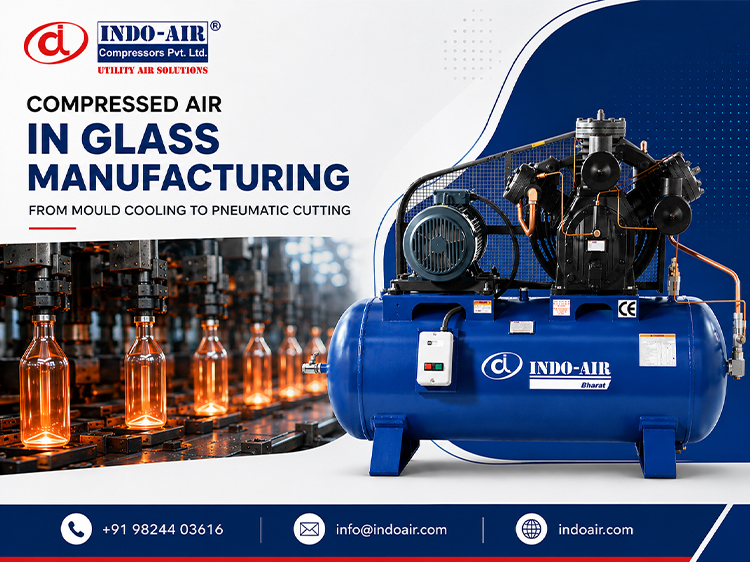
Compressed air plays a surprisingly central role in glass manufacturing, effectively breathing life into a process that might otherwise seem purely reliant on heat. From the moment molten glass comes into contact with a mould to the final, precise cuts, compressed air is consistently at work, ensuring quality, efficiency, and safety. Essentially, it’s the versatile workhorse that helps shape, cool, and finish your everyday glass products. Whether it’s rapid cooling to prevent defects or precise pneumatic tools for cutting, this invisible utility stream is indispensable.
The Unseen Powerhouse: Compressed Air in Glass Manufacturing
Glass manufacturing is a high-temperature, high-precision industry, and compressed air is a surprisingly critical ingredient throughout the entire process. It’s not just about blowing air; it’s about controlled force, rapid cooling, and precise movement. Without a reliable and well-maintained compressed air system, modern glass production would be significantly slower, less efficient, and produce lower quality products. Think of it as the silent partner, always there, always working, enabling the intricate dance between molten glass and finished product.
- Initial Stages: Forming and Shaping
At the very beginning, during the actual formation of glass products, compressed air is vital. In processes like blow moulding for bottles and jars, compressed air is literally what inflates a gob of molten glass into its desired shape within a mould. The pressure and flow rates need to be precisely controlled to ensure uniform wall thickness and to prevent defects like thin spots or bursts. This delicate balance of heat and pressure is where compressed air truly shines.
- Moving Components and Automation
Beyond shaping, compressed air powers countless pneumatic cylinders and actuators that move machinery and components across the production line. From opening and closing mould halves to transferring hot glass items and operating conveyor systems, pneumatics offer robust, reliable, and relatively simple automation solutions. This is especially important in environments with high temperatures and the potential for glass shards, where electrical systems might be more vulnerable.
Master of Temperature: Mould Cooling in Glass Manufacturing
One of the most critical applications of compressed air in glass manufacturing is mould cooling. When molten glass (which can be over 1000°C) is introduced into a mould, rapid and consistent cooling is paramount. Without it, the outer surface of the glass can crystallize or become hazy, and the mould itself can degrade quickly, impacting product quality and production costs. Compressed air offers an effective and controllable way to manage these extreme temperatures.
- Direct Air Blasting for Cooling
In many glass forming operations, particularly for containers, compressed air is directly blasted onto the exterior of the moulds. This direct impingement cooling helps dissipate heat efficiently from the mould surface. The air flow rate and pressure can be adjusted to achieve specific cooling profiles, which are often critical for the optical properties and structural integrity of the final product. Even subtle variations in cooling can lead to stress points or visual imperfections that make the product unusable.
- Internal Mould Cooling with Air
Sometimes, cooling needs to be more precise, or access to the mould exterior is limited. In such cases, compressed air can be circulated through internal channels within the mould itself. This allows for a more controlled and uniform cooling effect, which is particularly beneficial for complex shapes or thick-walled items. This method helps maintain mould integrity and ensures that the glass cools evenly, preventing thermal shock and internal stresses.
- Advantages for Durability and Efficiency
Using compressed air for mould cooling significantly extends the lifespan of expensive moulds. By preventing excessive heat buildup, it reduces thermal fatigue and wear, meaning fewer mould changes and less downtime. Additionally, efficient cooling allows for faster production cycles – the quicker the glass cools and solidifies in the mould, the sooner the next item can be formed. This directly translates to increased throughput and overall operational efficiency.
Precision at Pressure: Pneumatic Cutting Tools for Glass Production
While often associated with brute force, pneumatic tools in glass production are actually celebrated for their precision and speed, especially when it comes to cutting and finishing. Manual cutting of hot glass is not only dangerous but often imprecise. Compressed air enables automated and semi-automated cutting solutions that deliver consistent, clean results.
- Automated Scoring and Breaking
For many flat glass applications, or even for certain container shapes, glass needs to be scored and then broken along that score line. Pneumatic scoring heads, controlled by compressed air, can apply precise, consistent pressure with a scoring wheel or diamond tip. Following the score, pneumatic breaking systems delicately apply force to snap the glass along the weakened line, resulting in clean edges without splintering, which is crucial for safety and further processing.
- Cutting Molten Gobs with Pneumatic Shears
In the initial stages of glass container manufacturing, molten glass emerges from a forehearth as a continuous stream. Pneumatic shears are employed to cut this stream into precisely sized “gobs” – measured amounts of molten glass that will then fall into the moulds. The rapid and powerful action of pneumatic cylinders ensures a clean, consistent cut, which directly impacts the weight and quality of the finished product. Any inconsistency here can lead to under- or overweight products, causing defects or waste.
- Edge Finishing and Trimming
After initial forming or cutting, glass products often require additional finishing to remove excess material or to create smooth, safe edges. Pneumatic tools, ranging from small grinders to specialized trimmers, can be used for these tasks. Their high operational speed and torque, combined with a relatively light weight, make them ideal for continuous use in a production environment, ensuring consistent quality and worker comfort.
Advancements in Compressed Air Technology for Glass Manufacturing
The role of compressed air isn’t static; it’s continually evolving with technological advancements. Innovations in compressor design, air treatment, and control systems enhance the efficiency, reliability, and precision of compressed air applications in glass manufacturing. It’s about getting cleaner, drier air to the application point with less energy.
- Energy-Efficient Compressors
Modern glass plants are increasingly adopting variable speed drive (VSD) compressors. These intelligent machines adjust their motor speed to match the air demand, significantly reducing energy consumption compared to traditional fixed-speed compressors that often run at full capacity regardless of need. Given that compressed air systems can account for a substantial portion of a plant’s energy bill, these efficiencies are critical for cost-saving and environmental footprint reduction.
- Advanced Air Treatment and Filtration
The quality of compressed air is paramount in glass manufacturing. Contaminants like oil, moisture, and particulates can cause defects in the glass, damage pneumatic equipment, and lead to production downtime. Innovations in air dryers (refrigerant, desiccant) and multi-stage filtration systems ensure that the air reaching the moulds and tools is ultra-clean and dry. This attention to air quality prevents costly imperfections in the final glass product and extends the life of pneumatic components.
- Smart Monitoring and Control Systems
Today’s compressed air systems are integrated with sophisticated monitoring and control systems. These systems can track air pressure, flow rates, temperature, and dew point in real-time. They can also anticipate maintenance needs, detect leaks, and optimize compressor performance. This data-driven approach ensures consistent air supply, minimizes wastage, and provides valuable insights for preventative maintenance, all contributing to a more reliable and efficient glass production line.
Ensuring Peak Performance: Maintenance and Optimization
Even the most advanced compressed air systems require diligent maintenance and continuous optimization to deliver maximum benefits. Neglecting these aspects can lead to costly inefficiencies, unplanned downtime, and substandard product quality. A proactive approach is always better than a reactive one when it comes to such a vital utility.
- Regular System Audits and Leak Detection
A significant portion of compressed air energy is often lost through leaks in the distribution network. Regular audits, using ultrasonic leak detectors, are essential to identify and repair these leaks promptly. Even small leaks can add up to substantial energy waste over time, impacting both operational costs and the overall efficiency of the system. Think of it as patching tiny holes in a very expensive balloon.
- Scheduled Maintenance of Equipment
Adhering to manufacturer-recommended maintenance schedules for compressors, dryers, filters, and pneumatic tools is crucial. This includes routine tasks like changing oil and filters, checking belt tension, and inspecting valves. Regular checks can prevent minor issues from escalating into major breakdowns, ensuring continuous and reliable operation, which is critical in a 24/7 manufacturing environment like glass production.
- System Sizing and Pressure Optimization
Ensuring the compressed air system is correctly sized for the plant’s actual demand is key. An undersized system will struggle, leading to pressure drops and compromised tool performance, while an oversized system wastes energy. Furthermore, optimizing operating pressure—running the system at the lowest effective pressure required for all applications—can lead to significant energy savings without sacrificing performance. Every psi reduction can translate to tangible energy savings.
Compressed air, far from being a simple utility, is an integral and increasingly sophisticated component of modern glass manufacturing. Its precise application in mould cooling, its vital role in pneumatic cutting, and its general use in automation underscore its importance. As the glass industry continues to demand greater efficiency, precision, and sustainability, the role of clean, dry, and intelligently managed compressed air systems will only grow.
FAQs
1. What is the role of compressed air in glass manufacturing?
Compressed air plays a crucial role in glass manufacturing, being used for various applications such as mould cooling, pneumatic cutting, and powering pneumatic tools.
2. What are the advantages of using compressed air for glass mould cooling?
Using compressed air for glass mould cooling offers advantages such as faster cooling times, uniform cooling, reduced energy consumption, and improved glass quality.
3. What are the innovations in pneumatic cutting technology for glass production?
Innovations in pneumatic cutting technology for glass production include advancements in precision cutting, automation, and integration with digital control systems for improved efficiency and accuracy.
4. How are pneumatic cutting tools utilized in glass manufacturing?
Pneumatic cutting tools are utilized in glass manufacturing for processes such as cutting, shaping, and drilling, offering benefits such as high precision, reduced material waste, and increased productivity.
5. What are some examples of compressed air applications in glass manufacturing for efficiency and precision?
Examples of compressed air applications in glass manufacturing for efficiency and precision include air cushion systems for glass handling, air knives for cleaning and drying, and pneumatic actuators for precise movement and control.