
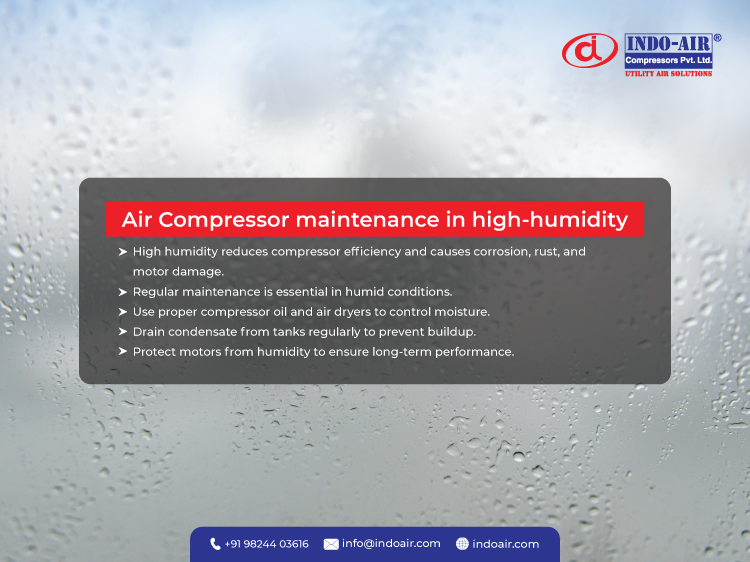
Maintaining Air Compressors in High Humidity can have a major impact on air compressor longevity & performance. Within the compressor system, condensate may form as a result of the air becoming saturated with moisture. If left unchecked, this excess moisture can lead to a number of problems, such as decreased efficiency, increased component wear and tear, & even system failure.
Key Takeaways
- High-humidity can significantly impact air compressor performance, leading to corrosion, rust, and motor damage.
- Regular maintenance is crucial for air compressors in high-humidity conditions to prevent moisture related issues.
- Choosing the right air compressor oil and using air dryers are essential for maintaining efficiency in high-humidity environments.
- Proper draining of condensate from air compressor tanks is a best practice for preventing moisture buildup.
- Protecting air compressor motors from moisture and humidity-related damage is important for long-term performance. anting compressors.
Water vapor in the air can also cause output fluctuations & uneven air pressure, which can be harmful in applications that need accurate air delivery. Also, excessive humidity may make the compressor system more susceptible to corrosion. Moisture exposure makes metal components especially prone to rust, which can result in structural flaws and possible leaks. This damages downstream machinery & operations by compromising the compressor’s integrity and possibly contaminating the compressed air. In order to apply efficient maintenance techniques that reduce these risks, operators in humid environments must have a thorough understanding of these effects.
There are various proactive steps that can be taken to prevent corrosion and rust in high-humidity environments. Primarily, lowering moisture levels can be achieved by making sure the compressor is kept in a climate-controlled setting. Installing the compressor indoors or in a protected location can help reduce exposure to outside humidity, if at all possible. To further lower the chance of rust formation, protective coatings can be applied to metal surfaces to form a barrier against moisture. Regularly checking & maintaining the compressor’s parts is another smart move.
This involves looking for any indications of wear or damage that might permit the entry of moisture.
Maintaining a regular cleaning schedule to get rid of dust & debris can also help keep surfaces from becoming wet.
Also, an extra line of defense against rust and corrosion can be added to the compressed air system by using desiccant filters or corrosion inhibitors. For air compressors operating in high-humidity environments to operate at their best, regular maintenance is necessary. Potential problems can be found before they become serious ones with the aid of routine inspections and maintenance.
For example, keeping an eye on the seals, oil levels, & filter conditions can stop moisture from getting into the system & damaging it. In order to maintain efficiency and dependability, scheduled maintenance also makes it possible to replace worn components on time. Air quality is maintained through routine maintenance in addition to mechanical care. Air that is saturated with moisture can cause contamination that impacts not only the compressor but also any equipment or tools that use compressed air.
Operators can guarantee that their systems continue to function effectively and that the compressed air quality satisfies industry standards by following a rigorous maintenance schedule, which will ultimately increase productivity and lower operating expenses. When using an air compressor in an environment with high humidity, choosing the right oil is essential. The ideal oil should have characteristics that improve its resistance to moisture contamination and give moving parts enough lubrication. Due to their superior resistance to oxidation & thermal breakdown over traditional mineral oils, synthetic oils are frequently advised for humid environments.
Also, these oils typically have superior water separation qualities, which keeps lubrication effective and helps avoid emulsification. Also, it is crucial to take into account the oil’s viscosity. Lower viscosity oils may work better in high-humidity environments because they can flow more readily and offer superior lubrication at different temperatures.
To prevent wear, operators must weigh this against the requirement for sufficient film strength. Speaking with producers or industry professionals can offer insightful advice on how to choose the best oil for a given set of operational requirements. In high-humidity settings, draining condensate from air compressor tanks is essential to avoiding water buildup, which can cause corrosion and operational inefficiencies. An automatic drain system should be installed so that condensate can be periodically removed without the need for human intervention.
This keeps water from accumulating over time, which could weaken the tank’s structure and impair performance. Operators should incorporate a regular manual draining schedule into their maintenance protocol in addition to automatic drains. For this, the tank must be routinely inspected and any accumulated water must be drained, particularly during humid weather or after extended periods of heavy use.
Maintaining a record of these actions can guarantee adherence to best practices and assist in monitoring maintenance activities. Electrical components that are resistant to moisture. Further protecting motors from humidity-related damage can be achieved by utilizing electrical components that are resistant to moisture. To avoid electrical failures, insulation and electrical connections must be inspected frequently. Any wear or corrosion should be fixed right away. The key is routine maintenance.
By putting these safeguards in place, motors will be able to function dependably even in difficult high humidity situations. dependable performance in environments with high humidity. By taking these precautions, air compressor motors can be shielded from the damaging effects of moisture, increasing equipment life and guaranteeing dependable operation.
By eliminating extra moisture from compressed air before it reaches downstream equipment, air dryers are essential for preserving air compressor efficiency in high-humidity settings.
Desiccant dryers, membrane dryers, and refrigerated dryers are just a few of the different kinds of air dryers that are available; each is appropriate for a particular application and humidity level.
Since they cool compressed air and condense moisture into liquid form for effortless removal, refrigerator dryers are frequently used for general applications.
Because they use hygroscopic materials to absorb moisture from the air stream, desiccant dryers work especially well in extremely humid environments. By keeping the compressed air dry, this keeps pneumatic tools and procedures from corroding & becoming contaminated.
Operators can prolong equipment life in high-humidity environments, lower maintenance costs, and greatly increase efficiency by incorporating a suitable air dryer into the compressor system.
FAQs
What is the impact of high-humidity on air compressor performance?
High humidity can lead to moisture accumulation in air compressor systems, causing corrosion, rust, and reduced efficiency. It can also lead to the formation of condensate in the air compressor tanks, which can further deteriorate the system if not properly managed.
How can I prevent corrosion and rust in air compressor systems in high-humidity environments?
To prevent corrosion and rust in high-humidity environments, it is important to regularly inspect and maintain the air compressor system. This includes using corrosion-resistant materials, choosing the right air compressor oil, and implementing proper drainage of condensate from the tanks.
Why is regular maintenance important for air compressors in high-humidity conditions?
Regular maintenance is crucial for air compressors in high-humidity conditions to prevent moisture related damage, ensure optimal performance, and extend the lifespan of the equipment. It involves checking for moisture accumulation, inspecting for corrosion, and replacing air compressor oil as needed.
How do I choose the right air compressor oil for high-humidity environments?
When selecting air compressor oil for high-humidity environments, it is important to choose a synthetic oil with rust and corrosion inhibitors. These oils are specifically designed to withstand moisture and prevent the formation of rust in the compressor system.
What are the best practices for draining condensate from air compressor tanks in high-humidity areas?
The best practice for draining condensate from air compressor tanks in high-humidity areas is to use automatic condensate drains or manual draining methods on a regular basis. This helps prevent the accumulation of moisture in the tanks, reducing the risk of corrosion and rust.
How can I protect air compressor motors from moisture and humidity-related damage?
To protect air compressor motors from moisture and humidity-related damage, it is important to keep the surrounding environment as dry as possible. Additionally, using motor covers, proper ventilation, and regular inspection can help prevent moisture-related issues.
What is the role of air dryers in maintaining air compressor efficiency in high-humidity environments?
Air dryers play a crucial role in maintaining air compressor efficiency in high-humidity environments by removing moisture from the compressed air before it enters the system. This helps prevent corrosion, rust, and other moisture-related issues, ensuring optimal performance of the air compressor.